Welcome to Djibouti
Djibouti, a land where the desert meets the sea, blending rich traditions with breathtaking landscapes at the crossroads of Africa.
Djibouti is a country of striking contrasts, where vast deserts and volcanic plateaus meet the turquoise waters of the Red Sea. Located in the Horn of Africa, it has long been a crossroads for trade and cultural exchange, shaped by influences from Africa and the Arabian Peninsula. Home to diverse communities, including the Somali, Afar, and Arab-Yemeni populations, Djibouti boasts a rich heritage reflected in its traditions, music, and cuisine. From the salt flats of Lac Assal to the bustling streets of Djibouti City, the country offers a unique blend of natural wonders and cultural vibrancy, making it a fascinating place to explore.
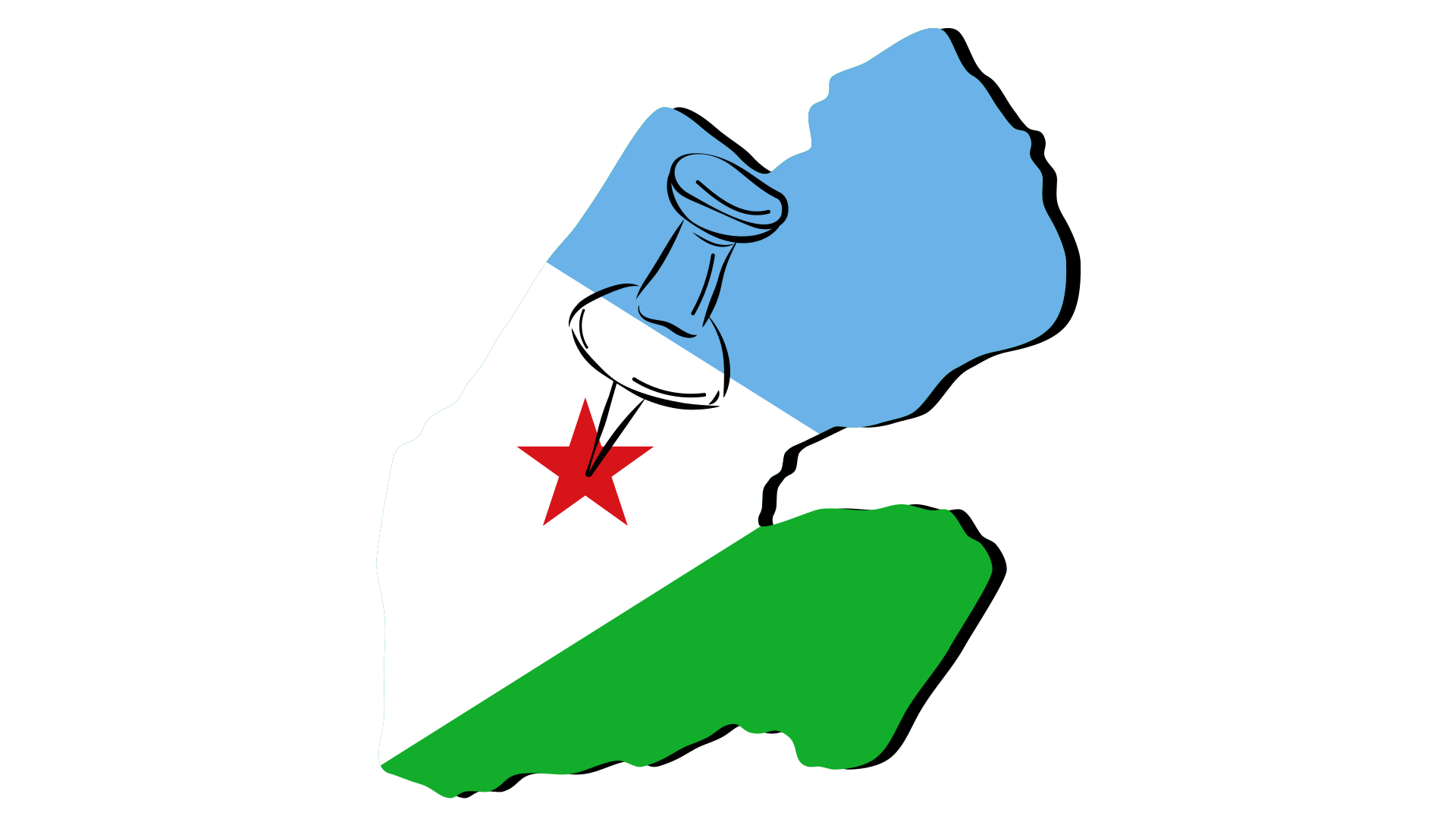
📌 Location & Geography
Nestled at the junction of the Red Sea and the Gulf of Aden, Djibouti is a key maritime gateway connecting Africa, the Middle East, and Asia. It shares borders with:
- Ethiopia (West & South)
- Eritrea (North)
- Somalia (Southeast)
- The Red Sea & Gulf of Aden (East)
Djibouti’s diverse landscapes range from barren deserts and volcanic plateaus to breathtaking coastal areas with some of the best diving spots in the world. It is home to Lac Assal, the lowest point in Africa, and Lake Abbe, famous for its otherworldly limestone chimneys.
History
Djibouti has been a crossroads of civilizations for centuries, serving as a bridge between Africa, the Middle East, and Asia.
The Adal Sultanate
During the Medieval period, Djibouti was part of the Adal Sultanate, a powerful Muslim state that dominated trade routes in the Horn of Africa. Known for its resistance against foreign incursions, Adal played a crucial role in regional conflicts, notably against Abyssinie and European explorers. The sultanate flourished through commerce, Islamic scholarship, and military strength, shaping the cultural and historical identity of the region.
Colonial Period
In the late 19th century, France established control over Djibouti, incorporating it into its colonial empire as French Somaliland (Territoire Français des Afars et des Issas – TFAI). The construction of the Djibouti-Addis Ababa railway transformed the port into a strategic trade hub, linking the Horn of Africa to international markets. Throughout the 20th century, the people of Djibouti asserted their aspiration for self-determination, leading to a growing movement for independence.
Independence
Following years of political struggle and two referendums, Djibouti gained independence on June 27, 1977. Hassan Gouled Aptidon became the country’s first president, laying the foundation for a sovereign nation focused on stability and regional diplomacy. Since independence, Djibouti has leveraged its strategic Red Sea location to develop its economy, becoming a key center for trade, logistics, and international cooperation.
Strategic Importance
Djibouti occupies a key position at the southern entrance of the Red Sea, along one of the world’s busiest maritime routes. Its location makes it a vital hub for international trade, military presence, and regional logistics in the Horn of Africa.
- 90% of Ethiopia’s international trade passes through Djibouti’s ports.
- Hosts military bases from 5+ countries: USA, France, China, Japan, and Italy.
- Handles more than 12,000 ships per year via the Port of Djibouti.
- Located 25 km from one of the world’s most strategic chokepoints: the Bab-el-Mandeb Strait.
- Connected to Addis Ababa via a 750 km electric railway, facilitating trade and transport.
- Home to the Djibouti International Free Trade Zone, the largest in Africa (4,800 hectares).